 Rashid Minhas
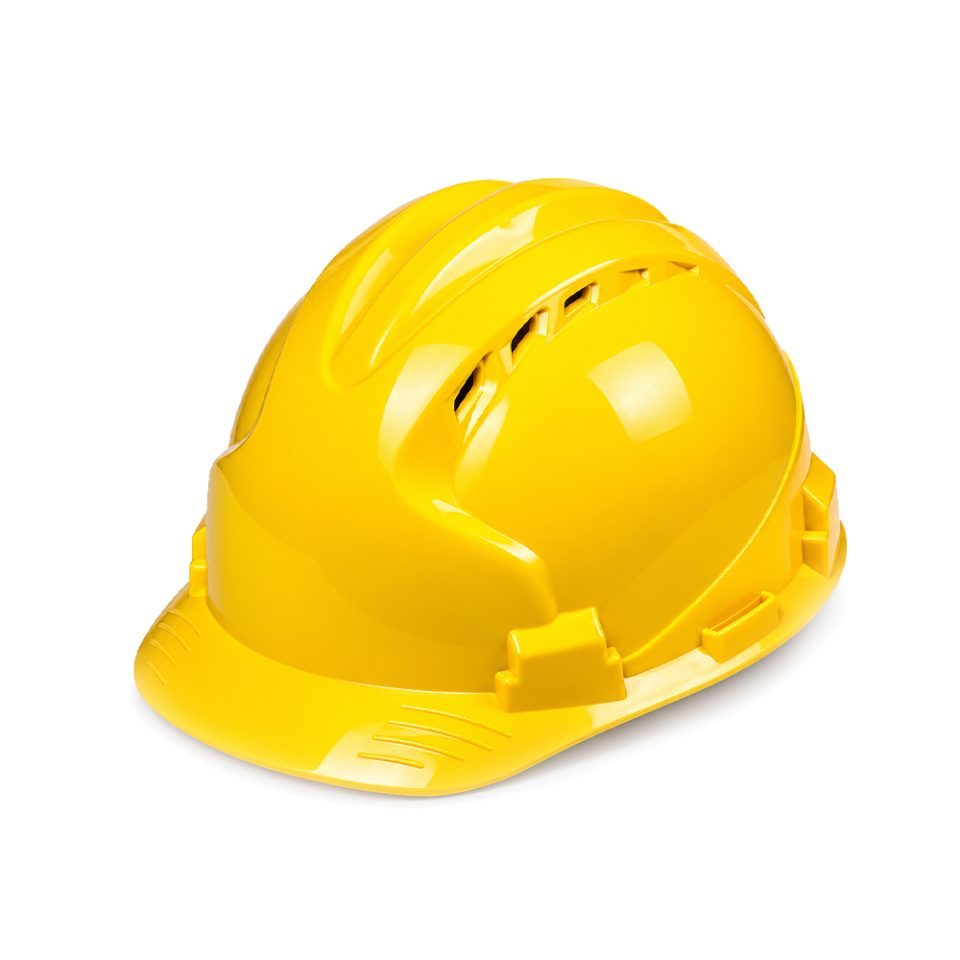
Choosing the right safety helmet is an important part of protecting workers on construction sites, in factories and in industrial workplaces. Falling objects, overhead structures and accidental impacts can create serious head-injury risks, making appropriate protective equipment essential.
However, not all safety helmets in Pakistan provide the same level of protection. Differences in certification, shell material, suspension design and fit can affect whether a helmet is suitable for a particular workplace.
This guide explains how to evaluate construction safety helmets, compare hard hat materials, understand safety standards, check replacement requirements and make informed purchasing decisions.
1. Start With the Hazards at Your Construction Site
Before buying a construction safety helmet, identify the hazards workers may encounter.
For example:
- Building construction: Falling tools, materials and overhead obstructions.
- Warehouses: Low structures, maintenance activities and falling objects.
- Electrical installations: Potential contact with electrical conductors.
- Scaffolding and elevated work: Falling objects, movement-related risks and potential head impacts during a fall.
- Factories: Machinery, overhead equipment and maintenance hazards.
The helmet must be selected according to the actual risks, not simply its shape, colour or advertised application.
A conventional hard hat may be suitable for certain overhead impact hazards, while tasks involving lateral impacts or a risk of helmet displacement may require different protective features.
Buying tip: Ask your site safety officer to identify the required helmet standard, impact classification, electrical rating and retention features before purchasing.
2. Understand Safety Helmet Certifications
Certification is one of the most important considerations when selecting safety helmets for construction work.
Two commonly referenced international standards are ANSI/ISEA Z89.1 and EN 397. They have different testing and classification systems and should not be treated as interchangeable.
ANSI/ISEA Z89.1
The ANSI/ISEA standard classifies industrial head protection according to its tested performance.
| Classification | General meaning | What buyers should check |
| Type I | Protection against impacts directed primarily at the top of the head | Whether overhead impact protection matches the site hazard |
| Type II | Additional protection for certain off-centre impacts | Whether lateral impact hazards require this design |
| Class G | General electrical protection classification | Confirm the exact electrical rating |
| Class E | Higher electrical protection classification | Confirm suitability for the electrical hazard |
| Class C | No electrical insulation protection | Avoid where electrical protection is required |
The 2026 edition of ANSI/ISEA Z89.1 also introduces Type I+ and Type II+ classifications with additional performance requirements.
Buyers should check which edition and classification appear on the actual helmet documentation.
EN 397
EN 397 is a European standard used for industrial safety helmets. It includes performance requirements and testing related to industrial head protection, with provisions that depend on the applicable edition and markings.
For helmets offered as EN 397-compliant, request the relevant documentation and check the helmet's markings, manufacturer information and applicable optional performance claims.
Important: A construction helmet should never be described as ANSI- or EN-certified merely because it resembles a certified helmet. The manufacturer must provide evidence supporting the claimed standard.
For an Adjustable China Safety Helmet in Pakistan, ask the seller to confirm its safety standard and provide the applicable manufacturer documentation before approving it for workplace use.
3. Compare Safety Helmet Shell Materials
Construction helmets can use different shell materials. Material selection influences weight, durability, manufacturing characteristics and environmental performance.
| Material | Common characteristics | Purchasing consideration |
| HDPE (High-Density Polyethylene) | Commonly used for lightweight industrial hard-hat shells | Verify the complete helmet's certification and service conditions |
| ABS (Acrylonitrile Butadiene Styrene) | Used in rigid protective helmet shells | Check impact performance, operating temperature and manufacturer specifications |
| Polycarbonate | Used in certain impact-resistant protective equipment | Review the helmet's tested performance and environmental limitations |
| Fibreglass composites | Used in some specialist industrial helmet designs | Check weight, approved applications and electrical properties of the finished helmet |
No shell material is automatically the safest for every job.
For example, an HDPE helmet and an ABS helmet may have different features, but their suitability should be judged by verified testing, complete helmet design and the workplace risk assessment.
Some economical construction helmets are described simply as plastic safety helmets. That description is insufficient to identify the precise polymer or protective performance.
When evaluating a molded-plastic helmet, request the manufacturer's technical specification before comparing it with named HDPE, ABS or composite models.
4. Why Adjustable Suspension Matters
A safety helmet's suspension is the internal harness that supports the shell on the wearer's head.
Its main functions include maintaining the intended space between the shell and the head, supporting the helmet's position and contributing to its overall protective performance.
Common adjustment systems include:
Pin-lock suspension: Uses an adjustable headband with fixed locking positions. It is a simple option for helmets that do not require frequent resizing.
Ratchet suspension: Uses an adjustment mechanism that allows the wearer to tighten or loosen the headband more conveniently.
Other adjustable suspension systems: May use straps, clips or manufacturer-specific mechanisms to control helmet fit.
The adjustment mechanism alone does not establish a helmet's impact rating. The shell and suspension must be evaluated as a complete protective system.
How to check helmet fit
- Place the helmet on the head in the manufacturer's recommended position.
- Adjust the suspension until the helmet feels secure without excessive pressure.
- Check that the headband sits correctly and the helmet is not excessively loose.
- Confirm that the suspension is securely attached to the shell.
- Use an approved chin strap or retention system where the risk assessment requires one.
- Check that the helmet remains correctly positioned during normal work movements.
Do not drill, modify or interchange suspension components unless the helmet manufacturer explicitly permits it.
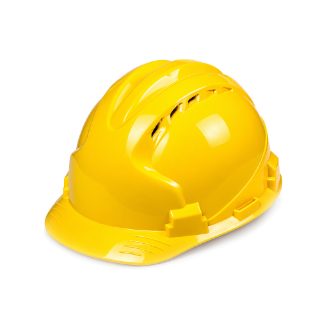
For buyers seeking an adjustable model, Saif Al Burhan Trading offers a Safety Helmet with Adjustable Suspension in White and Yellow. Its listed features include a molded plastic shell and adjustable internal suspension. Buyers should verify certification and site suitability before use.
5. White vs Yellow Hard Hats for Construction
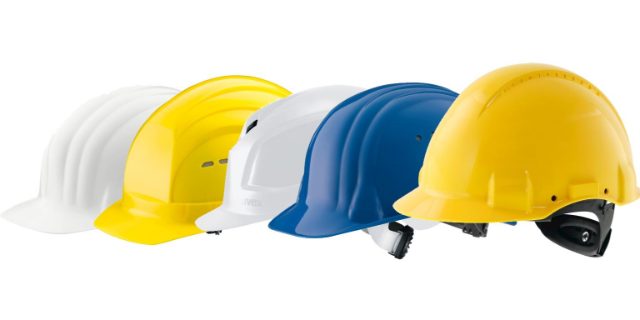
Helmet colours often help construction teams distinguish personnel or work areas. However, there is no universal colour-code system that applies to every construction site in Pakistan.
Some organisations use white helmets for supervisors or engineers and yellow helmets for general site workers. These are workplace conventions, not guaranteed occupational classifications.
When purchasing yellow hard hats for construction, confirm the employer's approved colour system.
| Helmet colour | Possible workplace use | Important consideration |
| White | Engineers, supervisors or other designated personnel | Follow the project's colour policy |
| Yellow | Construction workers or designated site teams | Colour does not indicate certification |
| Other colours | Visitors, contractors or specialist teams | Roles vary by employer and project |
Saif Al Burhan Trading lists its adjustable China safety helmet in both white and yellow, providing options for workplaces with different colour requirements.
View White and Yellow Adjustable Safety Helmets
6. When Should a Construction Safety Helmet Be Replaced?
A safety helmet should not remain in use simply because its shell looks undamaged.
Sunlight, heat, chemicals, impacts, storage conditions and normal wear can affect helmet components over time.
Inspect the helmet before use and remove it from service if you notice:
- Cracks, dents, deformation or signs of impact.
- A brittle, chalky or visibly deteriorating shell.
- Frayed, torn or damaged suspension straps.
- Damaged attachment points or headband components.
- Missing or illegible identification and safety markings.
Replace a helmet following a significant impact, even when no damage is immediately visible, in line with the manufacturer's instructions.
Do safety helmets have a fixed expiry date?
There is no single replacement period that applies to all construction safety helmets.
Manufacturers may specify different service lives for the shell and suspension. Working conditions can also shorten their usable life.
For example, 3M recommends replacement intervals for certain hard-hat products, but those intervals should not automatically be applied to helmets from other manufacturers.
Check the manufacturer's instructions and record the helmet's issue date, inspection history and replacement requirements.
7. Safety Helmet Price in Pakistan: What Affects the Cost?
The safety helmet price in Pakistan varies according to the product's manufacturer, design, certification, features and seller.
Factors that can influence pricing include:
- Verified safety standard and impact classification.
- Shell material and manufacturing specifications.
- Suspension adjustment and comfort features.
- Branded versus general-purpose product ranges.
- Additional features such as UV indicators or compatible accessories.
- Quantity purchased, availability and delivery charges.
Saif Al Burhan Trading's adjustable white and yellow China helmet was listed at Rs 950 when this guide was prepared, while some branded 3M helmets in its catalogue were listed at higher prices.
These are product listings, not a direct comparison of certified protection levels. Prices and stock can change.
A lower-priced helmet is not necessarily unsuitable, but a buyer should never substitute a low price for documented conformity with the required safety standard.
Check Adjustable Safety Helmet Price in Pakistan
8. Procurement Checklist: What to Verify Before Ordering
For contractors, purchasing managers and industrial safety officers, helmet selection should include a documented procurement review.
| Procurement check | What to confirm |
| Workplace suitability | Site risk assessment and required protection |
| Certification | Applicable standard, classification and supporting documentation |
| Manufacturer details | Brand, model and traceable identification |
| Shell material | Exact material and relevant technical specifications |
| Suspension | Adjustment type, fit range and compatible replacement parts |
| Colour | White, yellow or other site-approved colours |
| Manufacturing information | Production markings, shelf life and service-life instructions |
| Product condition | No visible damage, deterioration or missing components |
| Price and availability | Current unit price, stock and bulk-order terms |
| After-sales support | Returns, documentation and replacement-part availability |
Which safety helmet should you consider?
If the purchasing requirement is an adjustable-suspension helmet in white or yellow, Saif Al Burhan Trading lists a China-manufactured model that buyers can review for basic workplace requirements.
For buyers who need a clearly specified branded suspension system, its catalogue also includes the 3M H-706R Hard Hat with 4-Point Ratchet Suspension.
Buyers looking for helmets with additional UV exposure-monitoring features can review the 3M PELTOR G3000CUV-GU Safety Helmet with UVicator.
Each model should be evaluated separately against the construction project's requirements and verified manufacturer specifications.
You can also browse Safety Helmets in Pakistan to compare available options.
Frequently Asked Questions
1. Which safety helmet is best for construction work in Pakistan?
The best helmet is one with verified protection appropriate to the construction site's hazards, a secure fit and suitable retention features. Certification, impact classification and manufacturer guidance should take priority over colour or price.
2. What is an adjustable suspension safety helmet?
An adjustable suspension safety helmet has an internal head-support system that allows the wearer to adjust the fit. The suspension helps maintain the designed separation between the outer shell and the head.
3. Are yellow hard hats compulsory for construction workers?
Not universally. Yellow helmets are used for particular personnel categories at some workplaces, but colour policies differ between projects. Follow the site's approved PPE requirements.
4. Can a China safety helmet be used on construction sites?
Country of manufacture alone does not determine suitability. A China-manufactured helmet may be considered if its verified protective performance, certification and fit meet the site's requirements. Do not assume compliance without supporting documentation.
5. What is the safety helmet price in Pakistan?
Prices depend on the manufacturer, specifications and features. Saif Al Burhan Trading listed its adjustable China safety helmet at Rs 950 at the time of review. Confirm current pricing and suitability before purchasing.
6. Is an adjustable safety helmet suitable for electrical work?
An adjustable suspension does not establish electrical protection. Electrical work requires a helmet with the appropriate verified electrical classification and documented suitability for the task.
7. When should I replace my construction hard hat?
Replace it after a significant impact, when components show damage or deterioration, or when the manufacturer's specified service life has been reached. Inspect the shell and suspension before use.
Final Thoughts: Choose Protection Before Price
Choosing safety helmets in Pakistan should start with workplace hazards, verified standards and correct fit.
A well-selected hard hat combines an appropriate protective shell, compatible suspension, clear manufacturer instructions and a maintenance programme that keeps damaged equipment out of service.
For construction contractors and industrial buyers comparing white and yellow adjustable options, Saif Al Burhan Trading provides product listings and specifications for review.
Explore the Adjustable China Safety Helmet in Pakistan – White & Yellow
Safety information notice: This guide provides general purchasing and workplace safety information. It does not establish that any particular product is certified or suitable for a specific hazard. Always consult the manufacturer documentation, applicable workplace safety requirements and a qualified safety professional before selecting protective headwear.