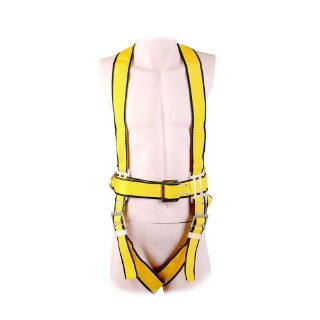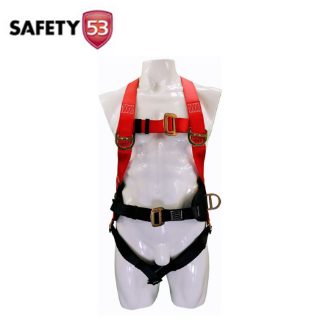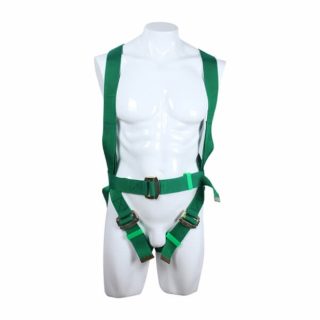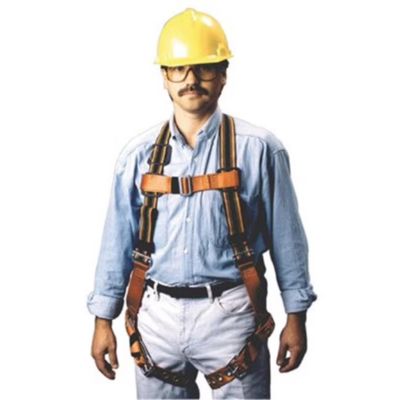







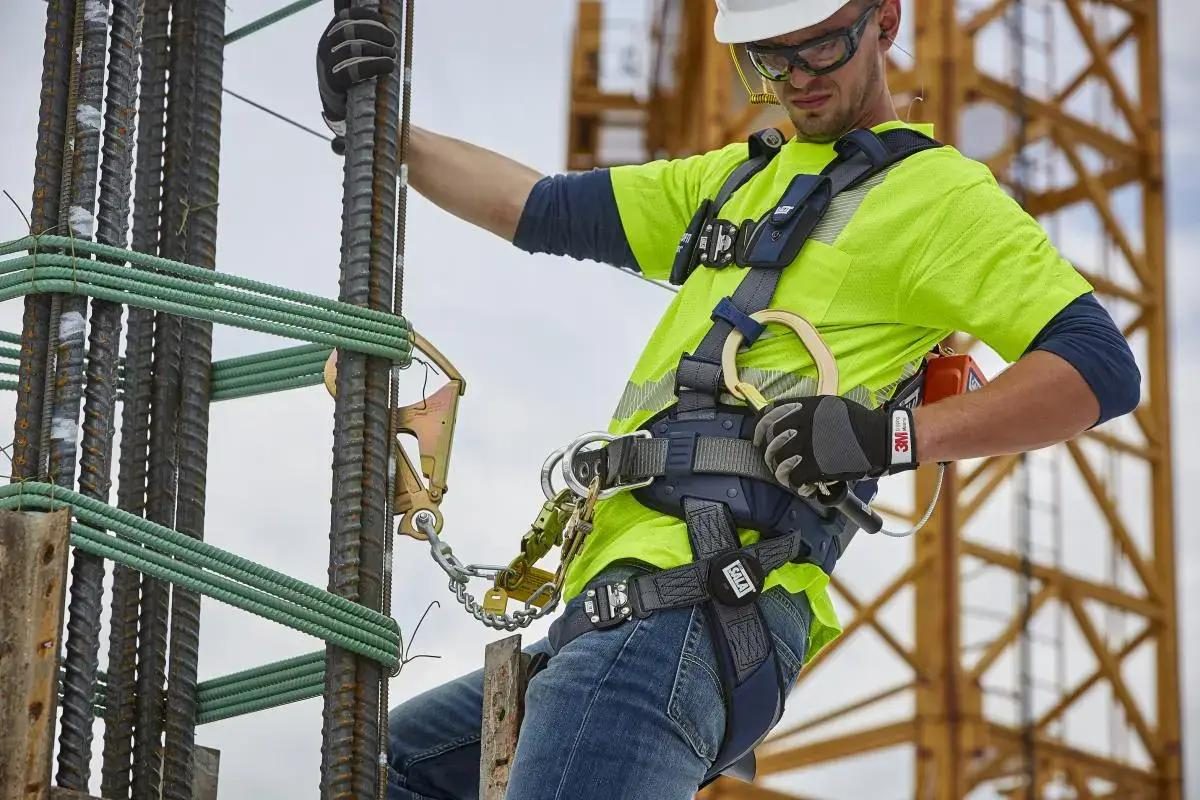
A safety harness is only one component of a fall-protection system. Buyers planning maintenance, scaffolding, roofing or elevated industrial work also need to review anchors, connectors, fall clearance, user competence and rescue capability. A double lanyard may support continuous attachment during suitable transitions, but the presence of two legs alone does not make a system safe. View the full-body safety harness range to compare listed configurations alongside the site risk assessment.
1. Fall Restraint, Fall Arrest and Work Positioning Are Different
| System purpose | What it does | Buying consideration |
| Fall restraint | Prevents reaching an unprotected fall edge | Correct length and suitable anchorage |
| Fall arrest | Stops a fall after it begins | Clearance, forces, anchor, energy absorption, rescue |
| Work positioning | Supports a worker at a task location | May require a separate backup fall-arrest arrangement |
Confusing these functions can cause a serious specification error. A positioning belt or waist belt is not a substitute for a full-body harness in a fall-arrest system.
2. Single vs Double Lanyard
A single-leg lanyard may be suitable when the worker remains attached to an appropriate anchor throughout the task. A twin-leg or Y-style lanyard can help when the planned movement requires transition between suitable anchors. The sequence and connector placement must follow the manufacturer’s instructions; not all configurations permit both hooks to be clipped anywhere on the harness or the same anchor.
| Feature | Single-leg lanyard | Twin-leg lanyard |
| Typical use | A fixed work position with maintained connection | Transitions between suitable anchors |
| Connection points | One working leg | Two working legs, used per manufacturer instructions |
| Main caution | Unprotected disconnection during movement | Incorrect hook storage, loading or connection technique |
| Must still check | System clearance and rescue | System clearance, compatibility and rescue |
3. Shock Absorbers and Fall Clearance
Many fall-arrest lanyards include an energy absorber intended to limit arrest forces when used within their rated system. Buyers cannot calculate safe clearance from lanyard length alone. The assessment must account for possible free fall, energy-absorber deployment, harness movement, worker dimensions, anchor location, swing fall and a margin of safety. Obtain the manufacturer’s clearance chart and have a competent person verify the site configuration.
A low anchor can greatly increase the required clearance. This is especially important on short-height platforms where a conventional lanyard might not stop a worker before striking a lower level.
4. Check the Complete Harness System
Confirm exact model, manufacturer, applicable standard and user-weight range.
Check approved fall-arrest attachment points, typically identified on the equipment.
Inspect webbing, stitching, buckles, D-rings, connectors and labels before use.
Check the connectors against actual anchorage geometry and compatibility.
Verify lanyard length, absorber deployment and the full clearance calculation.
Confirm the work plan prevents hazardous swing falls.
Maintain a site-specific prompt rescue plan, with people and equipment available.
5. Product Types in Saif Al Burhan’s Catalogue
Saif Al Burhan lists body harnesses, lanyards, rope grabs and retractable fall arresters in distinct categories. Its body harness listings include a Protecta First 4D Ring Full Body Safety Harness with Shock Absorbing Double Lanyard. The product name is useful for shortlisting, but do not infer a specific certification, permissible anchor arrangement or fall clearance from the title. Request the exact model manual and inspect the supplied labels. One relevant product listing is the HS 5226 full-body harness with double lanyard; its exact approved use and documentation must be checked.
6. When to Use a Retractable Fall Arrester Instead
A self-retracting device and an energy-absorbing lanyard behave differently. Some retractable systems reduce free-fall distance under approved conditions, but permitted anchor positions, edges, clearance and rescue limitations remain model-specific. The choice should come from the work-at-height plan, not from an assumption that one type is universally safer.
7. Procurement Checklist for Contractors
| Question for supplier | Why it matters |
| Which harness and lanyard models? | Avoid incompatible substitute products |
| Applicable standard and instruction manual? | Verify stated performance and permitted use |
| Approved connectors and anchors? | Ensure a functioning complete system |
| User size and weight range? | Support correct fit and equipment limits |
| Clearance and rescue information? | Check feasibility at the actual site |
| Inspection and replacement rules? | Control damaged or previously loaded components |
8. Common Mistakes to Avoid
Do not connect hooks to unapproved points, use damaged equipment, tie knots in energy-absorbing lanyards, mix incompatible components or continue using a system after a fall without proper assessment. Training and supervision are essential; purchasing a harness does not create a fall protection programme. Head protection is another distinct consideration: consult the construction safety helmet guide for impact, fit and retention requirements.
Frequently Asked Questions
Is a double lanyard safer than a single lanyard?
It may help maintain attachment during suitable transitions, but protection depends on the planned method, approved connection points and overall system.
Can I use any harness with any lanyard?
No. Check manufacturer instructions, hardware compatibility, intended functions and applicable standards.
Can a waist belt be used for fall arrest?
A waist belt should not be substituted for a full-body harness in a personal fall-arrest system.
How much clearance does a shock-absorbing lanyard need?
There is no single safe number for every system. Use the relevant manufacturer chart and a site-specific clearance assessment.
What should happen after a harness arrests a fall?
Follow the manufacturer’s removal-from-service and competent inspection rules, and carry out the planned prompt rescue response.
Final Recommendation
Discuss the job location, working height, attachment method, fall-clearance assessment and required quantities with Saif Al Burhan Trading before requesting a harness-and-lanyard quotation. The site’s competent fall-protection specialist should approve the final configuration.