






An employee sweeping a dusty warehouse, a worker sanding material and a technician handling solvents can all be described as needing “a mask”. But the airborne hazards are different, and a product that looks similar may provide very different protection. For purchasing teams in Karachi and elsewhere in Pakistan, the first question is not which mask costs less. It is what the employee is exposed to, how much exposure occurs and which protective equipment has been assessed as suitable. Buyers can compare available respiratory protection equipment after identifying the actual exposure hazard.
1. Start With the Airborne Hazard
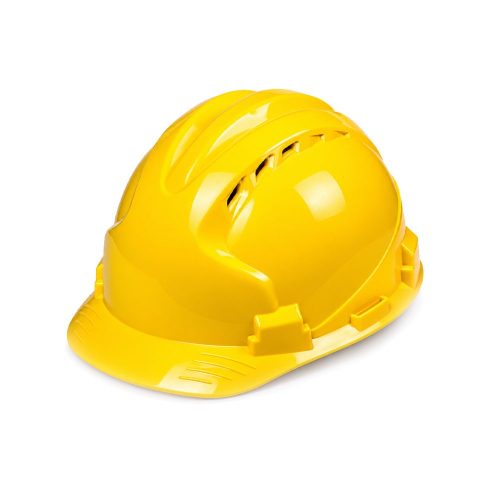
Dust from handling dry materials is not the same as solvent vapour or an oxygen-deficient atmosphere. A competent workplace assessment should identify the contaminant, exposure level, duration and surrounding conditions. Visible dust is not a reliable measure of risk; some harmful airborne particles may be difficult to see. For workplaces with multiple PPE hazards, see the existing safety helmet selection guide for separate head-protection considerations.
| Hazard or task | Protection approach to evaluate | Important warning |
| Routine nuisance dust | Assess whether respiratory PPE is needed; check product classification | A generic cloth or unapproved mask is not an N95 |
| Airborne particulates | Appropriately approved particulate respirator | Fit and exposure assessment are essential |
| Solvent or chemical vapours | Compatible gas/vapour cartridge respirator where suitable | N95 particle media alone does not filter vapours |
| Unknown or oxygen-deficient atmosphere | Specialist respiratory programme and appropriate supplied air | Do not use ordinary air-purifying masks |
2. What Does N95 Actually Mean?
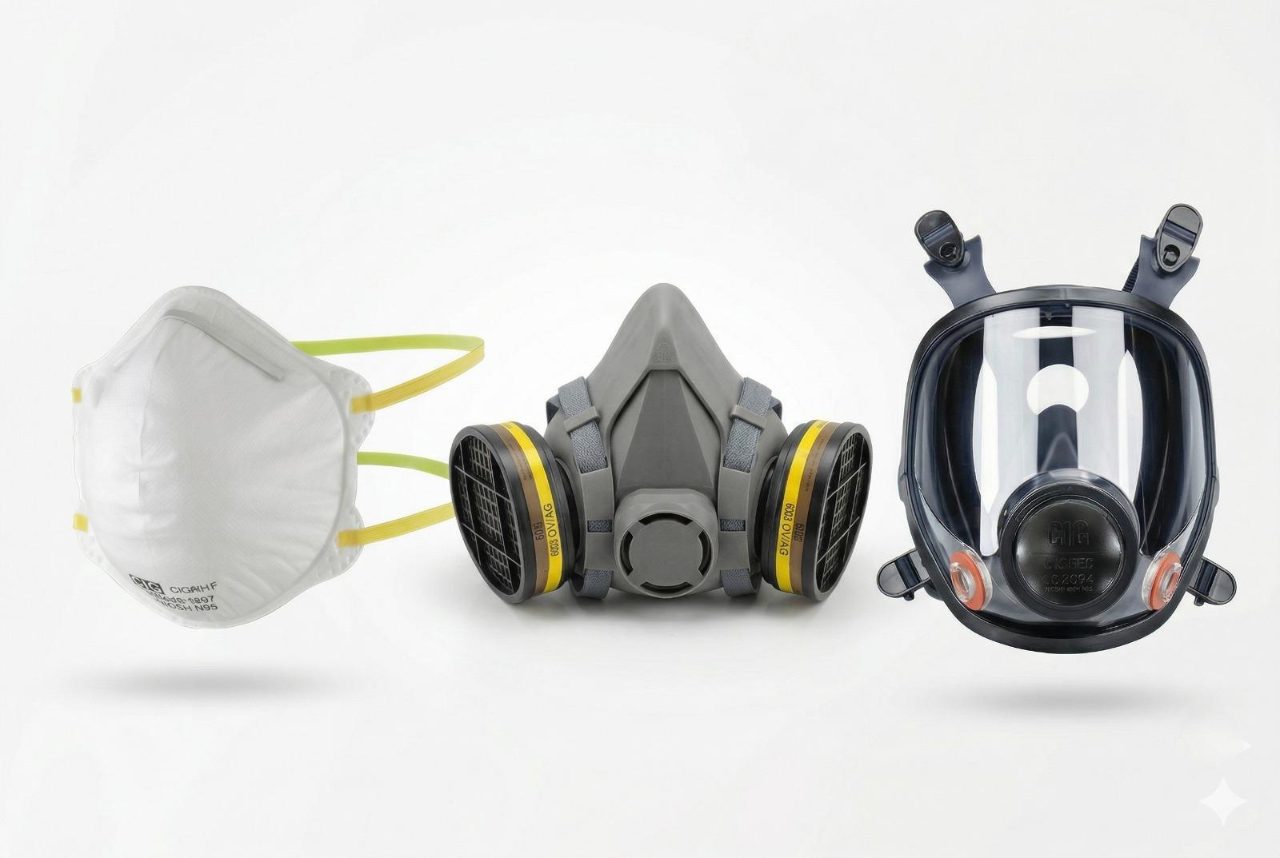
N95 is a US NIOSH particulate-filter classification, not a general marketing name. The 95 refers to minimum filtration performance in the specified certification test. This does not mean any wearer receives 95% protection in real working conditions; leakage around the face can seriously reduce effectiveness. Ask for verifiable product marking, manufacturer details and the correct approved configuration.
Other international classifications, including FFP2 or FFP3, use their own testing systems. Do not treat them as automatically interchangeable based only on a familiar number. A certified respirator is not the same product as an ordinary surgical or cloth face covering.
3. Disposable vs Reusable Respirators
| Selection factor | Disposable filtering facepiece | Reusable half/full facepiece |
| Routine use | Usually replaced when damaged, soiled or difficult to breathe through | Facepiece can be maintained following instructions |
| Filters | Integrated filtering material | Replaceable compatible filters or cartridges |
| Fit | Tight face seal needed for tight-fitting models | Tight face seal needed for tight-fitting models |
| Procurement | Model, size, approval and replacement frequency | Facepiece size, filter type, compatibility, cleaning and change schedule |
Reusable designs may suit recurring work, but they also require storage, cleaning, inspection and a replacement programme. A full-facepiece model adds face coverage, but it must not be assumed suitable for every chemical or exposure level.
4. How to Compare 3M Filters and Accessories
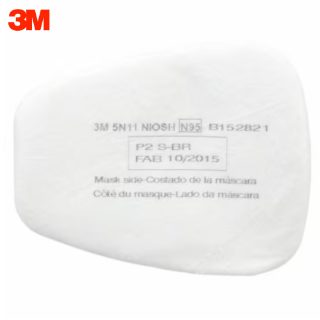
Saif Al Burhan lists respiratory items such as the 3M 502 filter adapter, 3M 5N11 N95 particulate prefilter, 3M 6001 organic-vapour cartridge, 3M 6200 reusable half-facepiece and 3M 6800 full-facepiece. These are examples of catalogue options, not a statement that each accessory works with every respirator. Compatibility depends on the manufacturer-approved assembly, correct holders/adapters and the precise hazard. Verify the product instructions before purchasing. For a specific reusable facepiece example, review the 3M 6200 half-face reusable respirator and verify compatible cartridges for the intended exposure.
A buyer searching for a “3M 502 filter retainer” should check the actual part number and intended adapter function. Buying the correct brand but incorrect connector is still an unsuitable purchase.
5. Fit Testing Is Different From a User Seal Check
For tight-fitting respirators, formal fit testing evaluates whether a selected make, model and size can seal adequately on a particular wearer. A user seal check, performed when putting on the respirator, is a routine check and does not replace fit testing. Facial hair along the seal can interfere with protection. Employers should follow the applicable workplace rules and a competent respiratory-protection programme.
6. When Should Filters and Masks Be Replaced?
There is no universal change interval for all respirator filters. Particulate filters may need replacement because of damage, contamination or breathing resistance, subject to the manufacturer’s instructions. Gas and vapour cartridges need an established change schedule suitable for the exposure; relying on odour alone is unsafe. Check shelf life and storage conditions too.
7. Buying Checklist for Pakistani Factories
Document airborne substances, tasks and assessed exposure.
Confirm the selected protection type and verifiable certification.
Check facepiece size, fit testing and worker training requirements.
Verify cartridge/filter compatibility and replacement supplies.
Request manufacturer instructions and approved configurations.
Record expected quantities, use frequency and site locations.
Ask Saif Al Burhan for current model and quotation details rather than relying on old blog prices.
Frequently Asked Questions
Can an N95 mask protect against paint fumes?
Not against gases and vapours. Paint-related exposure may include particulates and vapours, so respiratory selection needs a substance-specific assessment.
Is every dust mask an N95 respirator?
No. Only a genuinely approved product carrying the relevant designation and documentation should be described as N95.
Do disposable N95 respirators require fit testing?
Where used as mandatory tight-fitting occupational respiratory protection, fit testing is a central part of a proper programme. Requirements depend on applicable regulations and the working context.
Are 3M 502 and 5N11 interchangeable?
No. They are different components. Confirm the manufacturer-approved respirator, filter and retainer/adapter combination.
What affects respirator prices in Pakistan?
Approval class, model, disposable or reusable design, cartridge specification, size, and replacement requirements. Ask for a current quote.
Final Recommendation
Explore Saif Al Burhan Trading’s respiratory protection range and send the team your task, hazard assessment, required certification and quantities for a model-specific quotation. Do not select respiratory equipment for unknown or immediately dangerous atmospheres without specialist advice.